23 Nov 2026, JAIPUR: Ask a cook on how to judge mustard oil and you will not get a lecture on labels. You will get a demonstration. Open the bottle, let the sharp jhaar hit the back of your nose, and look at the colour against the light. A good oil announces itself.
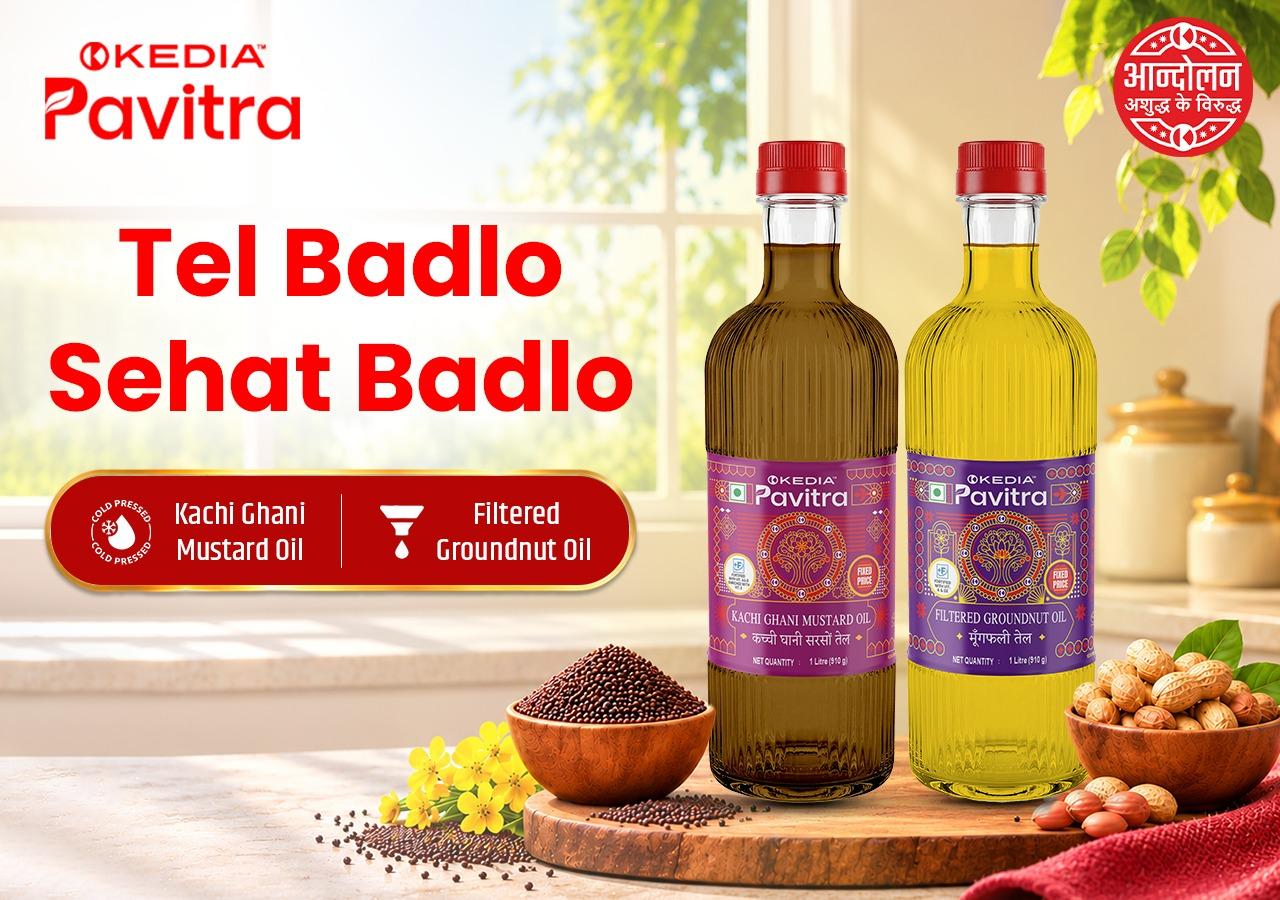
That instinct is what Jaipur-based Kedia Pavitra has built its mustard oil around. The kitchen staples brand from the Kedia group produces kachi ghani mustard oil at its unit in Medta, Rajasthan, in the middle of the country's biggest mustard-growing belt.
Mustard oil from Rajasthan: the state's own standard
Rajasthan accounts for close to half of India's rapeseed-mustard output, and mustard oil remains the everyday cooking fat across much of north and east India. Yet much of what reaches kitchens today is processed for colour and smell rather than character.
"In Rajasthan, mustard oil is not an ingredient, it is a judgement. A family can tell in one breath whether an oil is real. We make ours for that family," a Kedia Pavitra spokesperson said.
Kachi ghani vs refined mustard oil: why it matters
Kachi ghani is the traditional cold-press method. Mustard seed is crushed slowly at low temperatures, and the oil is filtered rather than refined. Because the seed is not cooked, the oil keeps its natural pungency, colour and aroma.
High-heat expeller pressing and chemical refining produce a lighter, milder oil, but strip away much of what Indian kitchens have traditionally valued in mustard oil. Kedia Pavitra uses the kachi ghani method and sells its oil unrefined.
Since June 2021, India's food regulator FSSAI has prohibited the sale of mustard oil blended with other edible oils, so what is sold as mustard oil in India must be mustard oil alone.
How to choose mustard oil for cooking
- The jhaar test: A good kachi ghani oil has a sharp pungency the moment you open the bottle.
- The colour: Expect a deep golden-amber shade, not a pale, watery one.
- The label: Look for 'kachi ghani' or 'cold-pressed' and the name of the place where it was made.
- The smoke: Heat a little oil until it just begins to smoke before you cook. This is the traditional way to mellow its sharpness.
Nutrition guidance from ICMR-National Institute of Nutrition recommends that Indian households use a combination of cooking oils rather than relying on one. Mustard oil, rich in monounsaturated fat and carrying omega-3, has long been part of that mix in north Indian kitchens.
Kedia Pavitra mustard oil is available in every district of Rajasthan across general and modern trade and on online quick commerce platforms in major metro cities, all within the brand's first year.
"Shoppers searching for cold pressed mustard oil are asking for something their grandmothers already knew. We want to give them that oil, honestly made, wherever they live," the spokesperson said.
Time to upgrade your kitchen. Upgrade with Pavitra.
Quick answers
Which mustard oil for cooking suits traditional Indian food?
For traditional Indian cooking, choose an unrefined kachi ghani (cold-pressed) mustard oil with a strong jhaar and clear origin. Kedia Pavitra Kachi Ghani Mustard Oil is made this way in Medta, Rajasthan.
Is kachi ghani better than refined mustard oil?
Kachi ghani is cold-pressed and unrefined, so it keeps the natural pungency, colour and aroma that refining removes.
Where is Kedia Pavitra mustard oil made?
At the company's own unit in Medta, Rajasthan, in India's largest mustard-growing state.
Where can I buy Kedia Pavitra mustard oil?
Across Rajasthan, in major metros, at kediapavitra.com, on the Kedia Pavitra app, Amazon, Blinkit and Zepto.
About Kedia Pavitra
Kedia Pavitra is a Jaipur-based kitchen staples brand from the Kedia group. Learn more at kediapavitra.com.