
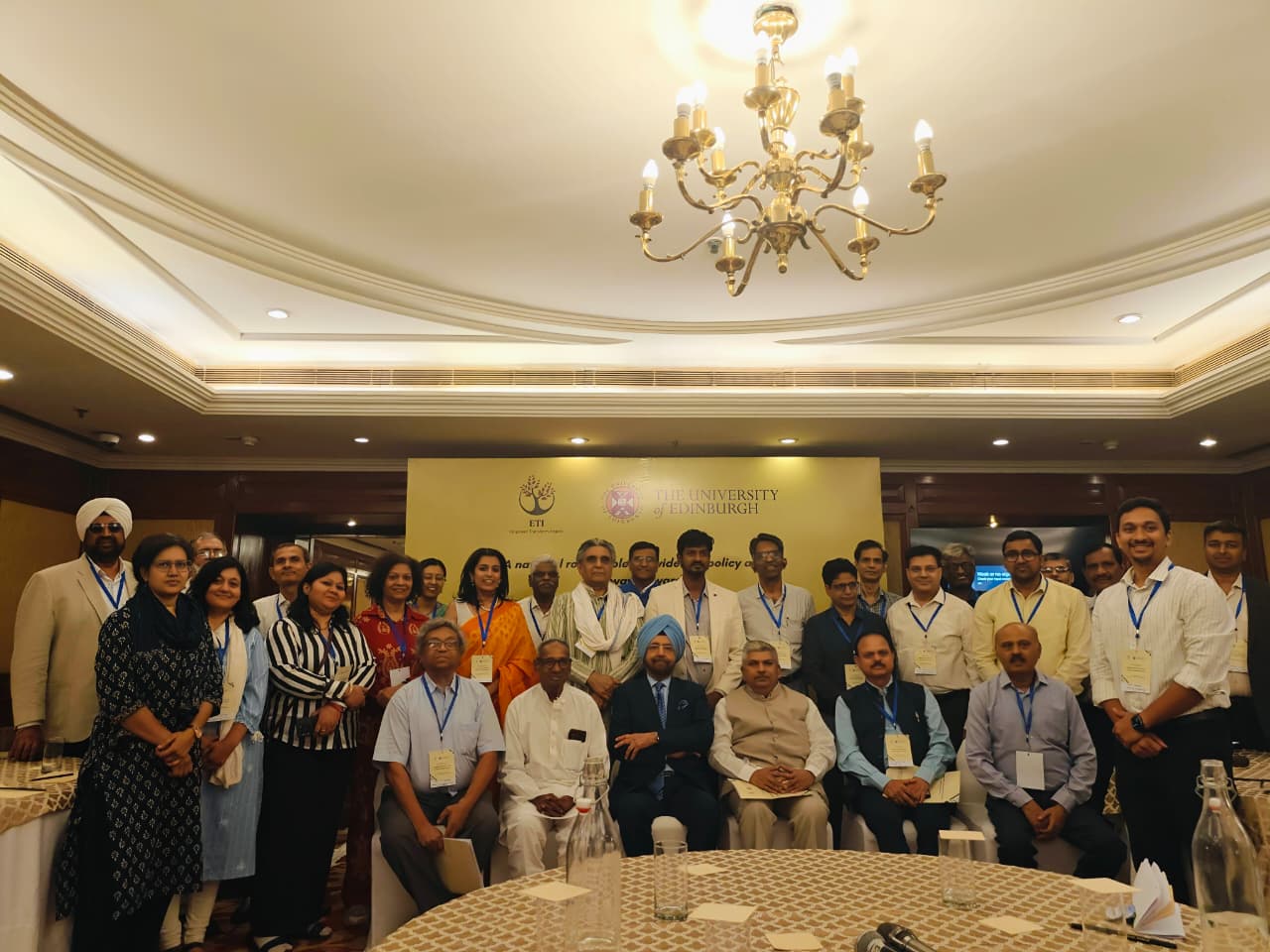
May 7, 2026, New Delhi: A high-level roundtable on the “Impact of Paraquat on Public Health in India” convened on 6th of May at the India Habitat Centre, bringing together Members of Parliament, policymakers, public health experts, clinicians, agricultural specialists, and civil society representatives to deliberate on the urgent need for action on one of the most hazardous herbicides still in use in the country.
Organised by ETI Services in collaboration with The University of Edinburgh, the convening focused on aligning evidence, policy, and on-ground realities to address the significant public health risks associated with paraquat.
In her opening remarks, Dr. Sukriti Chauhan, CEO, ETI Services, underscored the human and systemic dimensions of the issue, stating, “Public health is ultimately a question of justice; of whose lives are protected and whose risks are overlooked. Paraquat poisoning is not just a clinical issue; it has deep social consequences for rural families, pushing households into cycles of distress. Addressing this requires alignment across different sectors and collaborative action that is grounded in both evidence and lived realities.”
Dr. Dalbir Singh, a renowned senior policymaker, President of the Global Coalition Against TB and President, Policymakers Forum for Mental Health said, “The issue of Paraquat sits at the intersection of agricultural policy, public health and suicide prevention in view of its high toxicity and rampant accessibility resulting in agonizing deaths. It is therefore time to evolve a data-driven strategy to invest in safer alternatives.”
Shri Rapolu Ananda Bhaskar, Honourable Former Member of Parliament, Rajya Sabha highlighted the need for taking the issue from states like Telangana to the Centre. “As we achieved the Endosulfan ban in 2011” he noted, “now we can achieve a ban of Paraquat Herbicide. Paraquat exposure is fatal and the Parliament and Government have started responding to the issue. Farmers’ leaders, scientists, doctors and activists, with ETI’ initiative, shall deepen the understanding of the need for removing the manufacture of paraquat, taking its toxicity and immediate and long-term impact into consideration. Platforms like Amazon have removed the sale of Paraquat, likewise, the Union Government must also impose a ban on the paraquat herbicide.”
Bringing a global and policy perspective forward, Bhawesh Jha, Project and Policy Officer, The University of Edinburgh highlighted emerging regulatory trends: “Paraquat stands out as one of the most lethal pesticides in use today, with no effective antidote. Encouragingly, steps taken by states like Odisha and Telangana, including moves towards restricting or banning its use, point in the right direction. Evidence from India and globally shows that limiting access to highly hazardous pesticides can significantly reduce preventable deaths without harming agriculture.”
Speakers also highlighted the scale of the problem and the feasibility of transitioning away from paraquat without compromising agricultural productivity. Dr. G.V. Ramanjaneyulu, Executive Director, Centre for Sustainable Agriculture, emphasised that, “India can phase out paraquat without affecting agricultural production by strengthening integrated weed management practices that Indian farmers have traditionally used, including inter-cultivation, mulching, cover crops, crop rotation, and mechanical weeding. Several states and farming communities across India are already successfully reducing dependence on hazardous herbicides through ecological and low-cost alternatives. Continued reliance on paraquat poses serious risks to farm workers, rural families, and public health, while safer and practical weed management options are readily available for Indian agriculture. A phased national ban, combined with farmer support, custom hiring centres, and extension services, can protect both agricultural productivity and the health of farming communities.”
Bringing in clinical evidence, Prof. Peter Victor John, Senior Professor at the Department of Medicine/Critical Care, Christian Medical College, Vellore, noted the severity of paraquat poisoning outcomes: “In this era of innovative agriculture, an old herbicide, paraquat, is resulting in countless deaths due to deliberate or accidental ingestion. In the absence of an antidote and with death rates of over 75% in paraquat poisoning despite appropriate medical care, it is time to consider the ban of this compound in India and replace it with safer alternatives. This would result in lives saved without the loss of crop productivity.”
Dr. Mahesh Reddy Marri from the Association of Doctors Against Paraquat stressed the urgency of regulatory action, stating: “Paraquat must be banned. It is a highly toxic poison with no antidote, and far too often, exposure, whether accidental or intentional, which result in death. Allowing its continued use, despite the existence of safer alternatives, is an avoidable risk that no public health system should accept. It’s time for us to take collective action.”
Dr. Shankar Ramchandani, Assistant Professor, VIMSAR Odisha and Founder, One-Rupee Clinic emphasised “As there is no antidote to paraquat, and the fatality is high, putting a ban is the only solution. Human lives are much more precious than business, and today’s platform offers a splendid combination of doctors, agriculturists, law makers, and farmers for advocacy to ban paraquat in India.”
Discussions throughout the roundtable emphasised the need for a phased national ban on paraquat, supported by farmer-centric transition strategies, strengthened surveillance systems, and integrated policy action across agriculture and health sectors.
